The Role of the Architect
Systems Architecture · Chapter 9
Figure 9.1 · NASA’s PDP
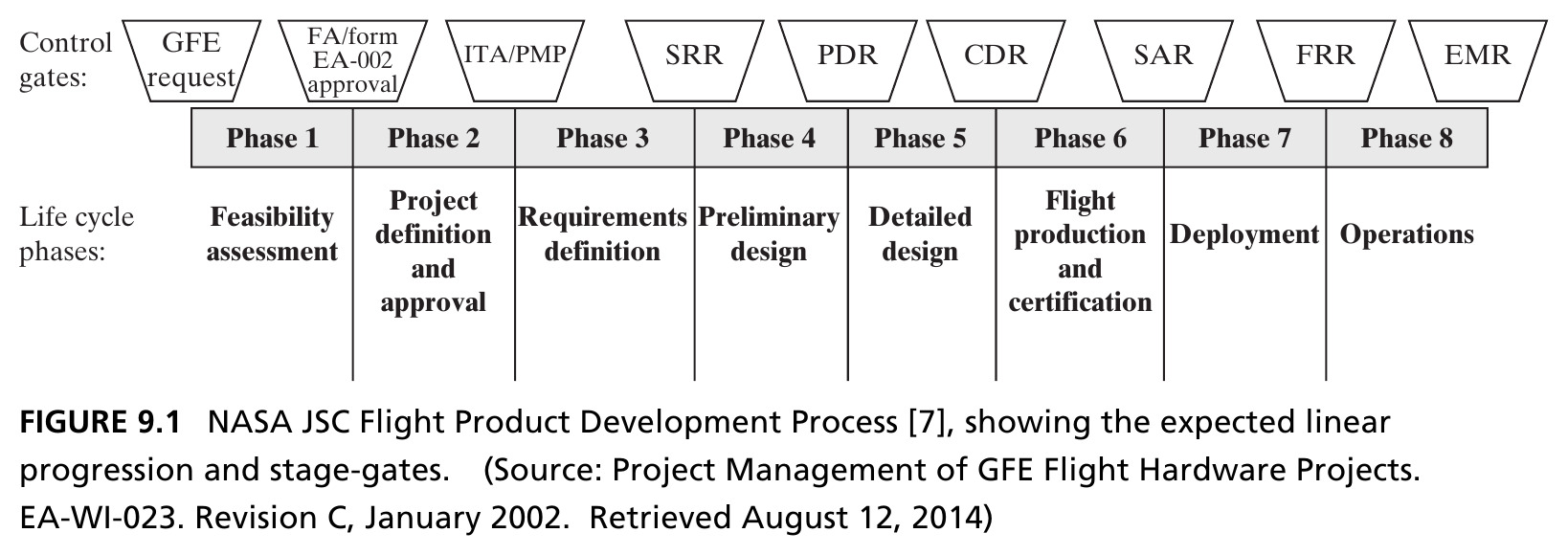
Includes some of the fuzzy front end (feasibility, approval, requirements) and includes operations: since NASA is usually the operator of its own products. Very traceability- and review-heavy, reflecting low-volume, high-cost, high-perceived-risk systems. Source: Crawley, Cameron & Selva (2016), Fig. 9.1.
Figure 9.2 · Helicopter Inc.’s PDP
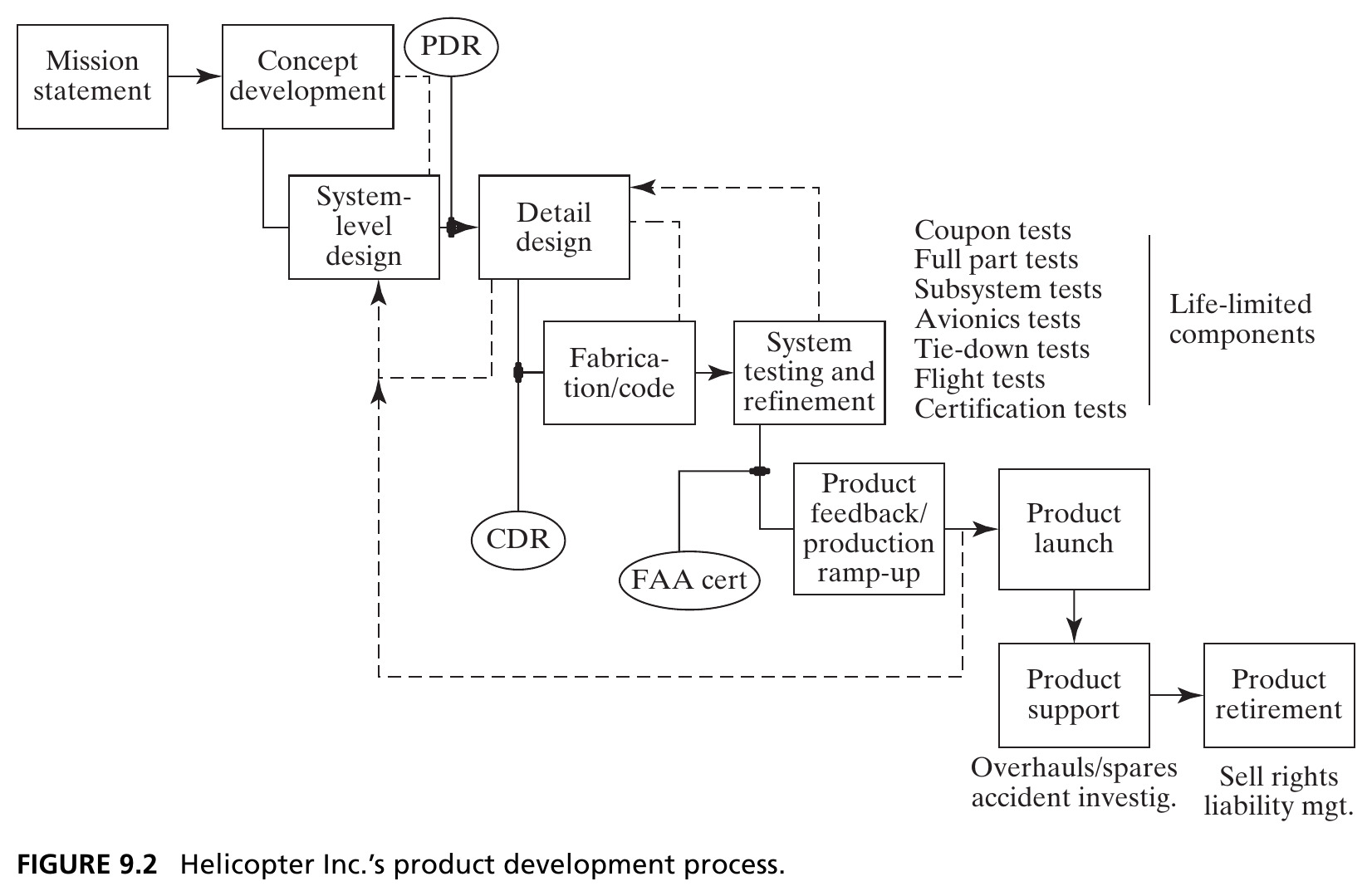
Compared to NASA, iteration loops stand out: even in aerospace, iteration is inevitable and not at odds with a stage-gated process. The process centers on FAA certification, itself an instrument of the more important process: sales. Source: Crawley, Cameron & Selva (2016), Fig. 9.2.
Figure 9.3 · Camera Co.’s PDP
- Camera Co.’s PDP explicitly shows upstream processes: strategy, voice of the customer, and R&D: all part of “conceiving”
- Manufacturing process development precedes product development: Camera Co. is a process-driven industry
- Raises a question: does the architect’s role in reducing manufacturing ambiguity matter more than innovation, given a stable customer base?
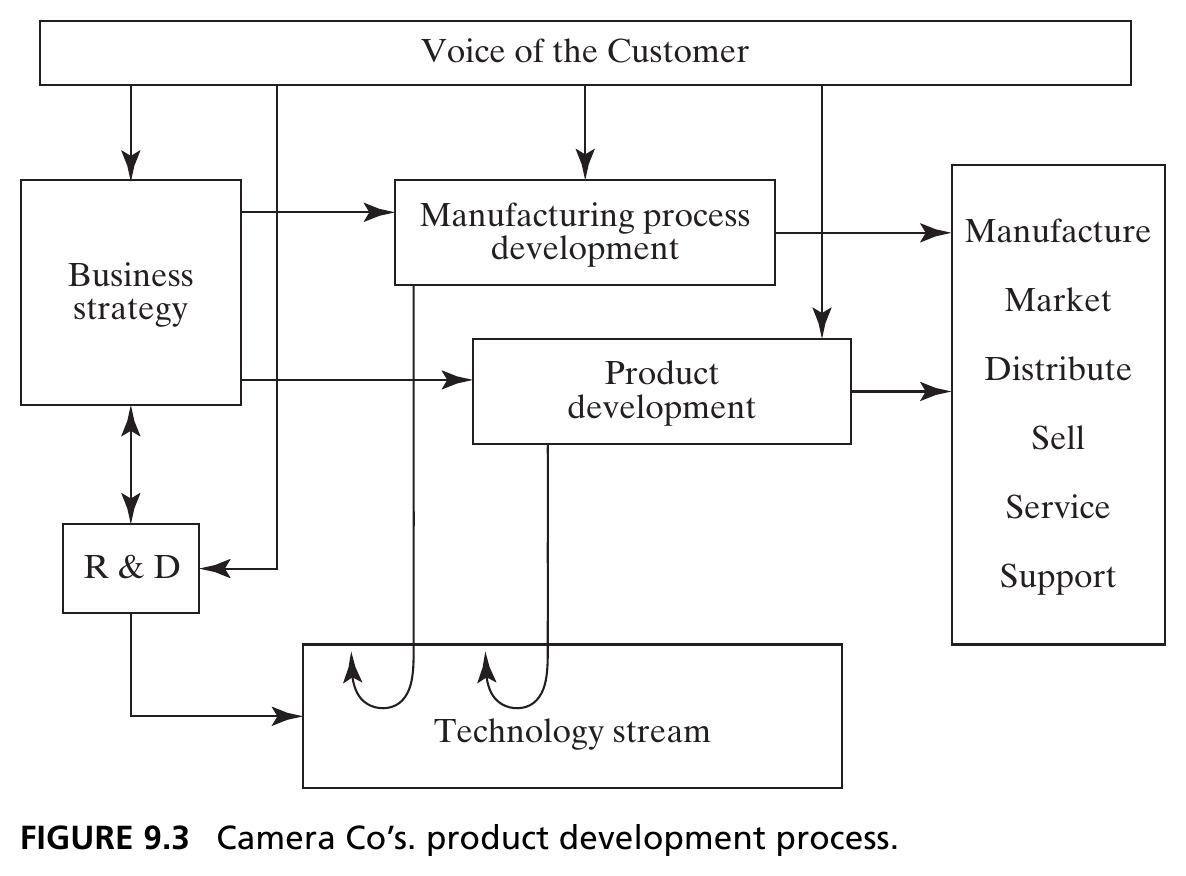
Figure 9.4 · An Agile PDP
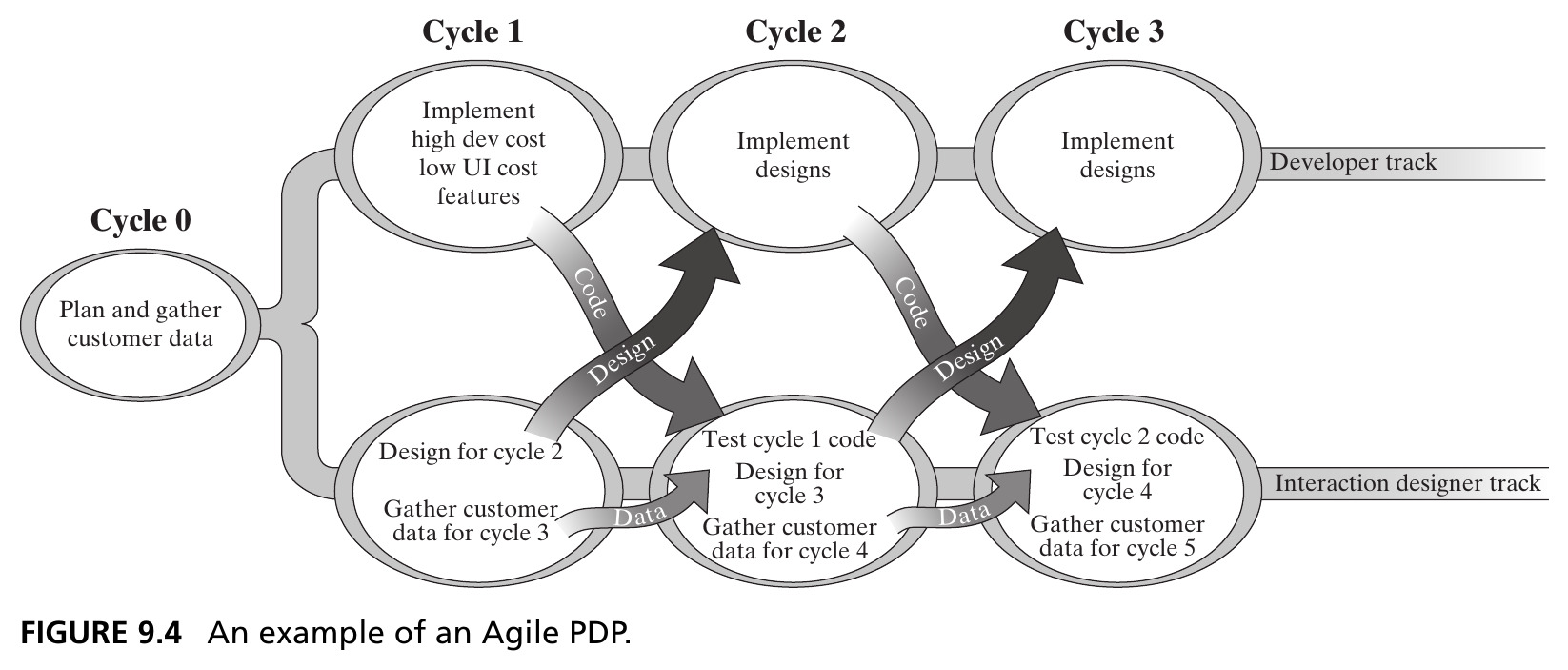
Agile uses iterative, incremental development, with teams revising requirements and solutions as they learn. The example illustrates a software development process. Source: Crawley, Cameron & Selva (2016), Fig. 9.4.
Figure 9.5 · The Generic PDP
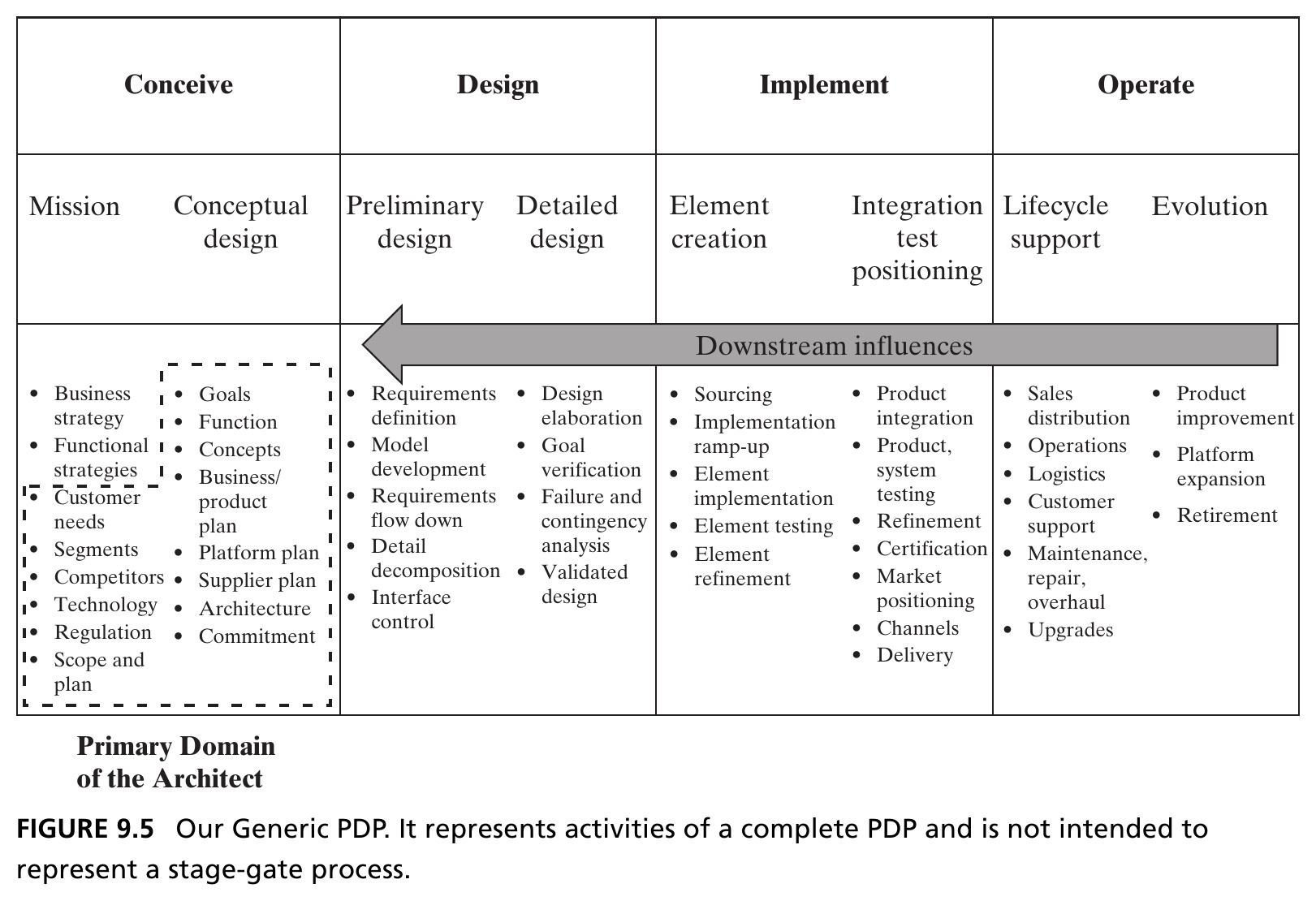
Four common activity groups: conceiving, designing, implementing, operating: a checklist, not a stage-gate process. The architect’s primary domain sits in “conceive,” but must move relevant downstream information back into the architecting phase. Source: Crawley, Cameron & Selva (2016), Fig. 9.5.
Figure 9.6 · Level 1: The Holistic Framework
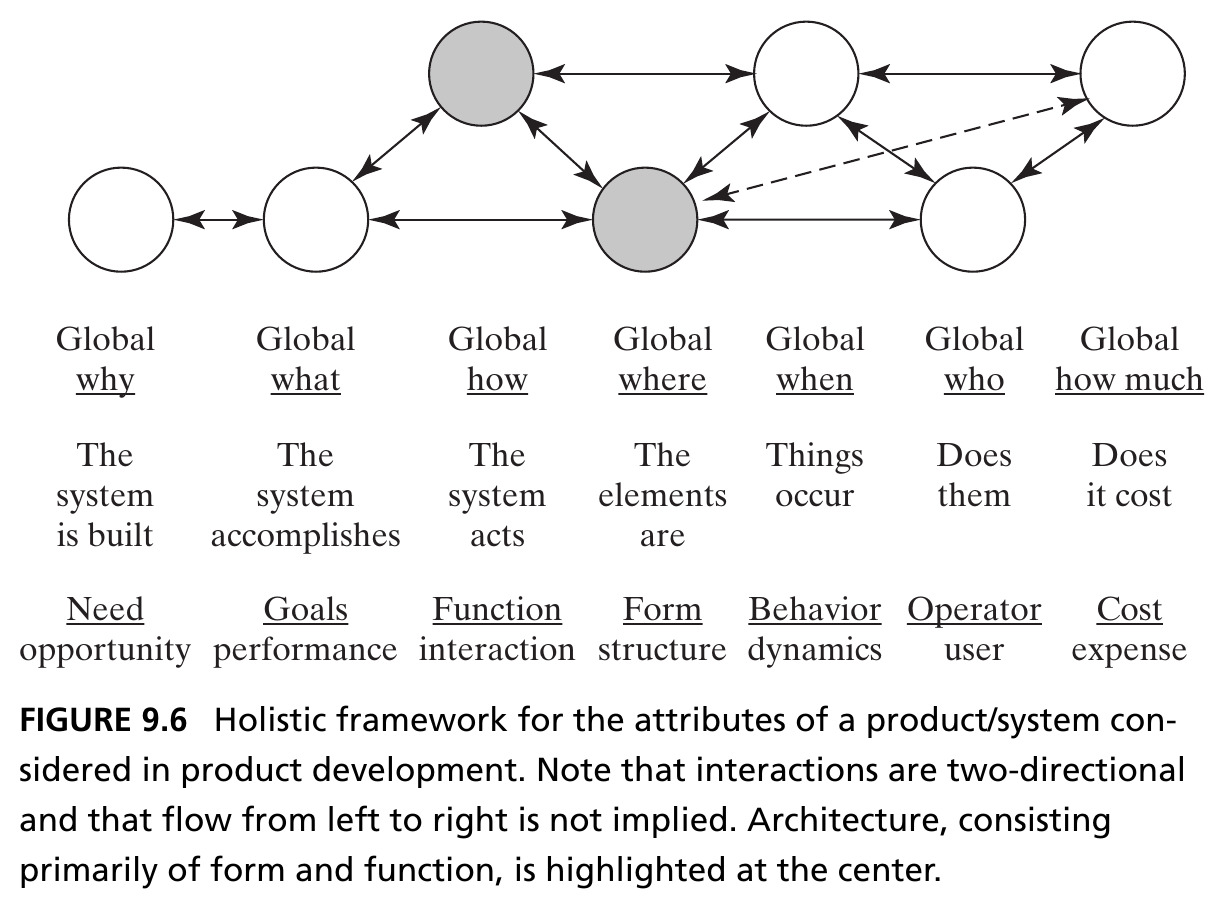
Architecture, form and function, sits at the center of the framework. Interactions are two-directional; flow from left to right is not implied. Source: Crawley, Cameron & Selva (2016), Fig. 9.6.
Figure 9.7 · Level 2: Design and Implementation in Parallel
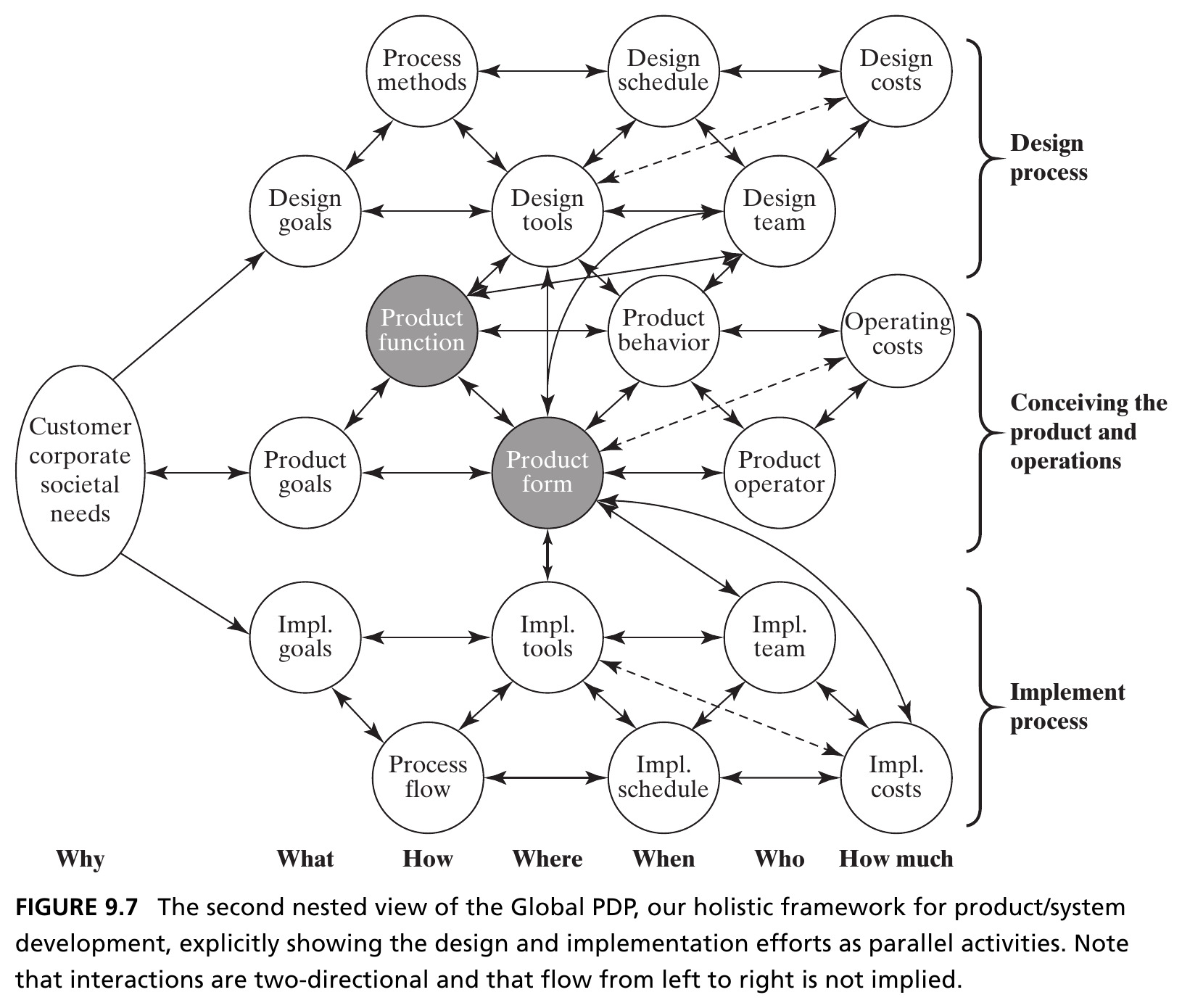
Moving up a layer: the design process and implementation process each get their own instantiation of the W Questions. The design process has its own form too: notably design tools, which shape and constrain the system form that’s achievable. Source: Crawley, Cameron & Selva (2016), Fig. 9.7.
Figure 9.8 · Level 3: The Enterprise Context
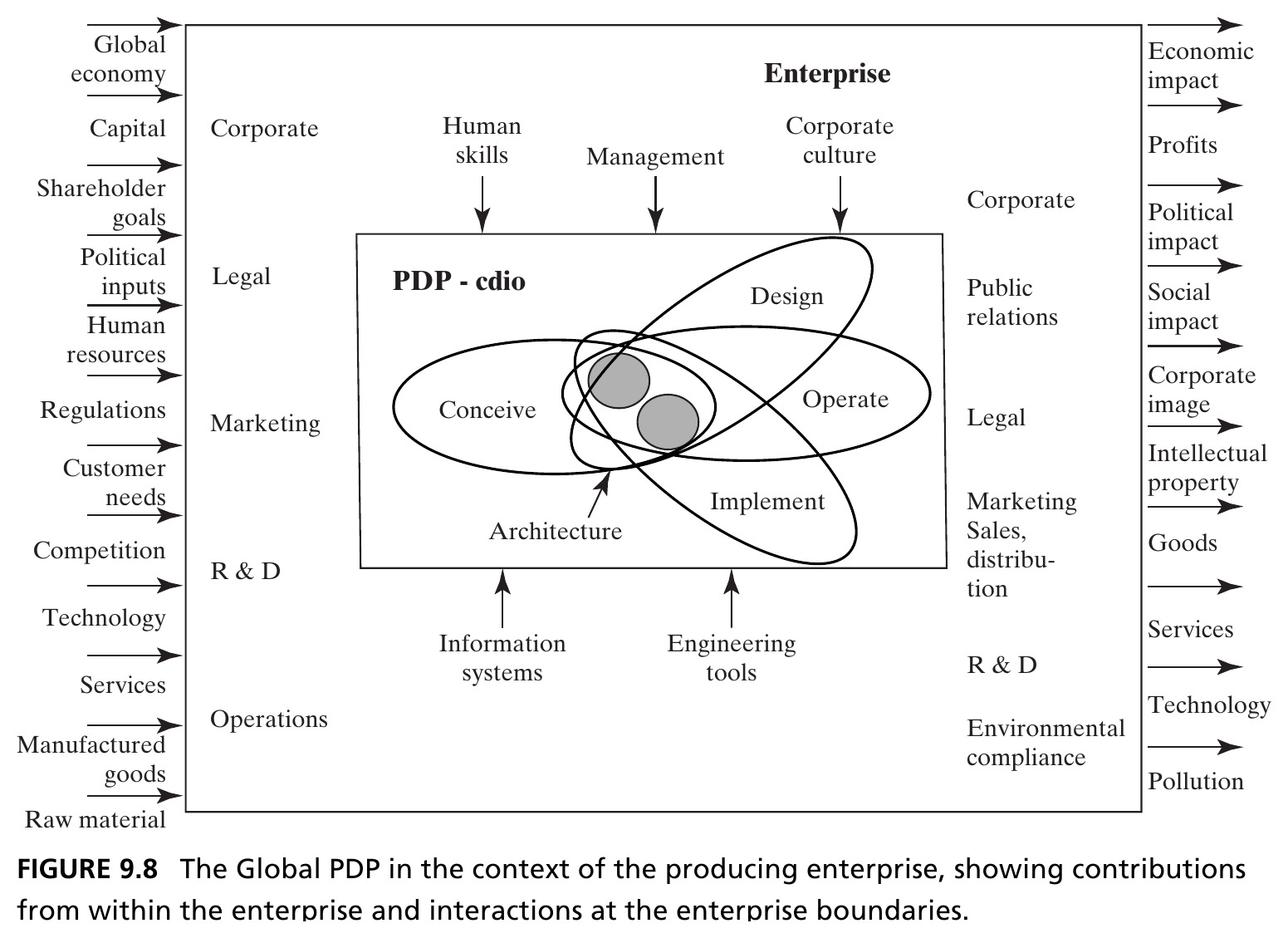
The broadest nested view: the firm’s PDP inside the enterprise boundary (R&D and corporate functions mostly upstream; PR, sales, distribution mostly downstream), plus external actors and attributes: capital, competition, regulation: that affect the enterprise. Source: Crawley, Cameron & Selva (2016), Fig. 9.8.
Figure 9.9 · Concept in Civil Architecture
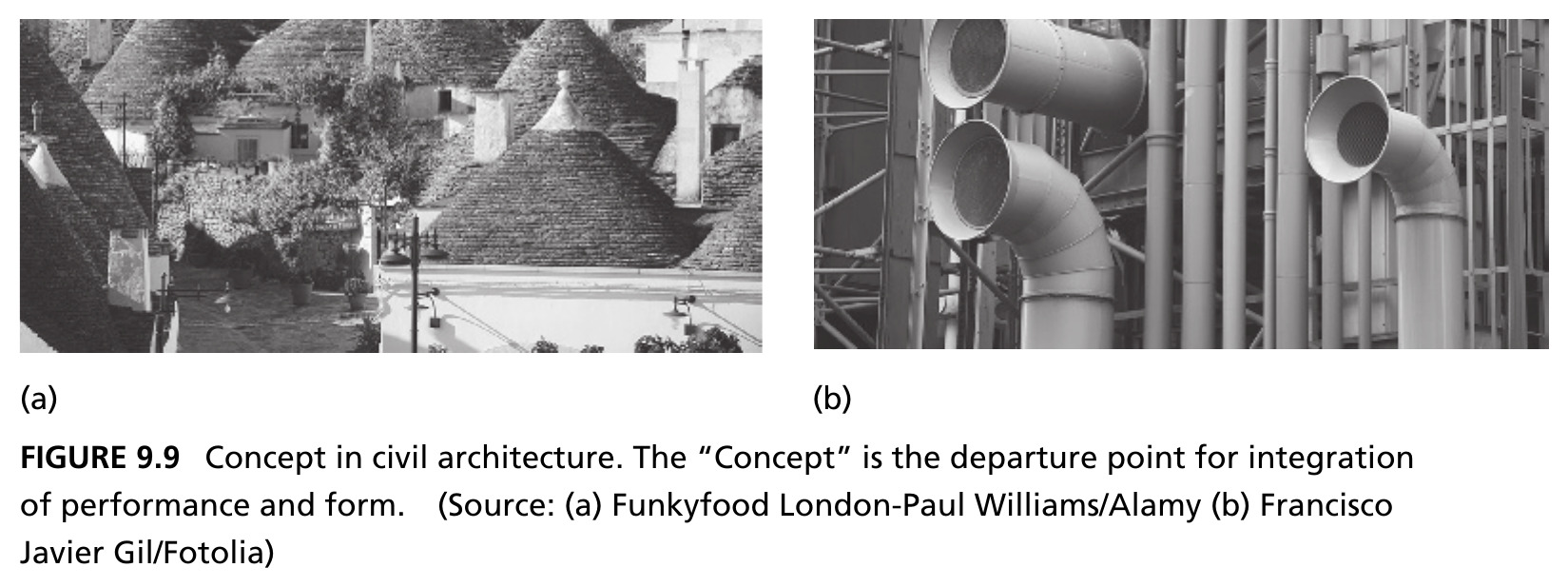
Left: Trulli houses, Alberobello, Italy (a). Right: industrial ductwork, Centre Pompidou, Paris (b). The concept is the departure point for integrating performance and form. Source: Crawley, Cameron & Selva (2016), Fig. 9.9. Photos: (a) Funkyfood London-Paul Williams/Alamy, (b) Francisco Javier Gil/Fotolia.
Figure 9.10 · Magic in Civil Architecture
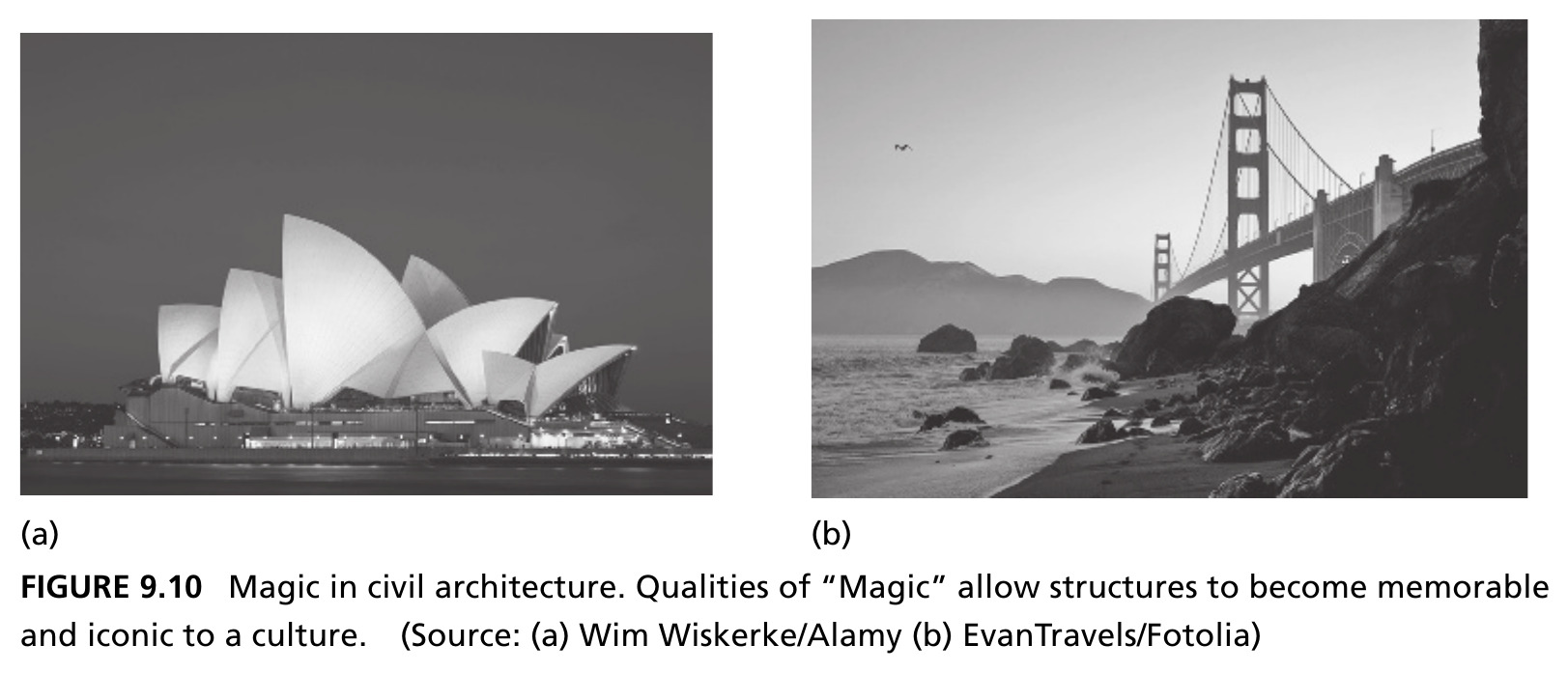
Left: Sydney Opera House (a). Right: Golden Gate Bridge (b). Qualities of “Magic” allow structures to become memorable and iconic to a culture. Source: Crawley, Cameron & Selva (2016), Fig. 9.10. Photos: (a) Wim Wiskerke/Alamy, (b) EvanTravels/Fotolia.
Figure 9.11 · Overlaying Performance and Poetry
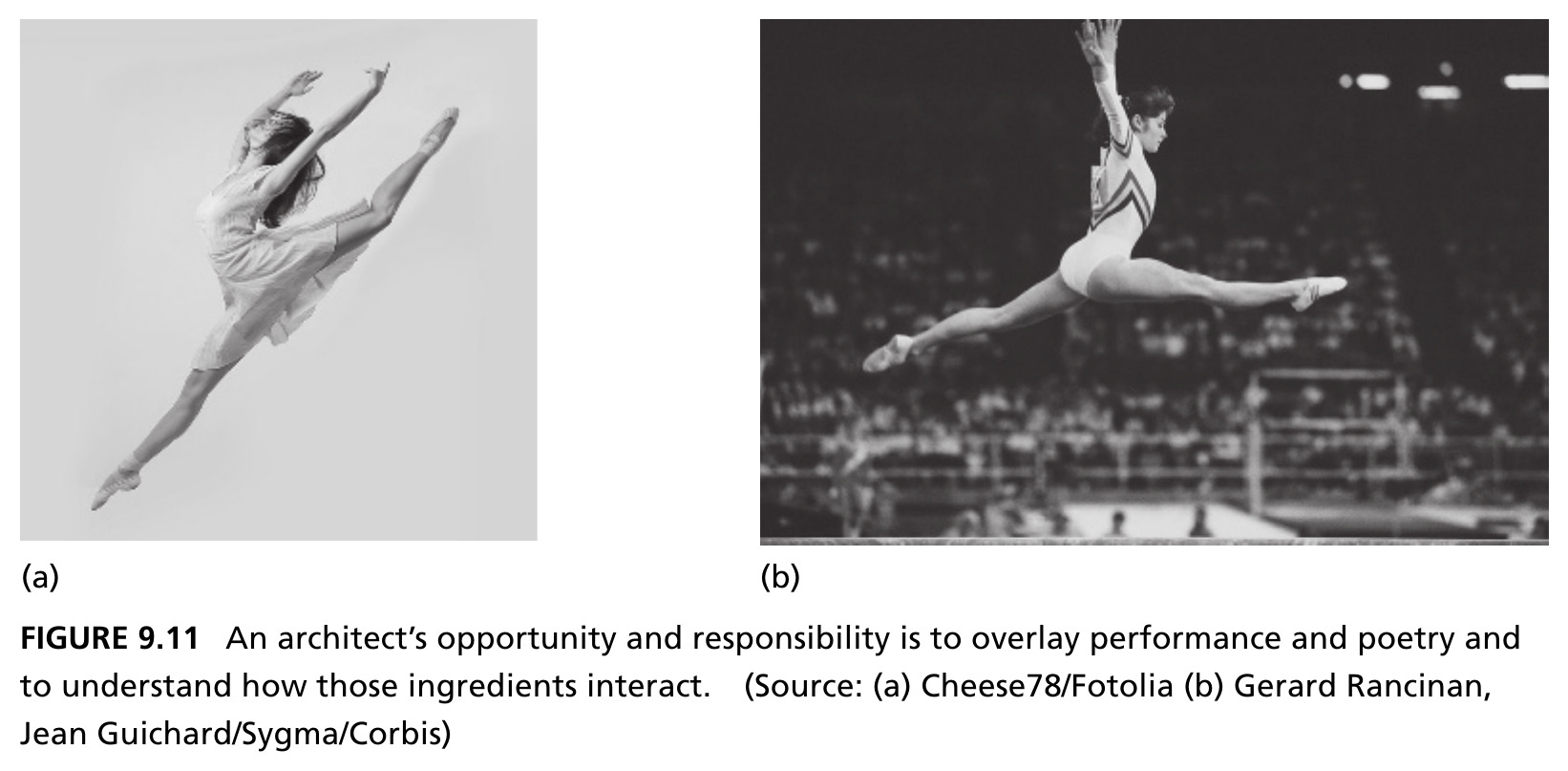
A ballerina and a gymnast share athleticism, dynamic patterning, and nuance of expression: yet one is considered “art,” the other “athletic expertise.” An architect’s opportunity and responsibility: to overlay performance and poetry, and understand how those ingredients interact. Source: Crawley, Cameron & Selva (2016), Fig. 9.11. Photos: (a) Cheese78/Fotolia, (b) Gerard Rancinan, Jean Guichard/Sygma/Corbis)