Systems Architecture · Chapter 7
Tip
Table 7.1 amends the Chapter 5 questions and adds a new one (7a) — collating everything into a method for synthesis, not just analysis.
“We cannot solve our problems with the same thinking we used when we created them.” — Albert Einstein

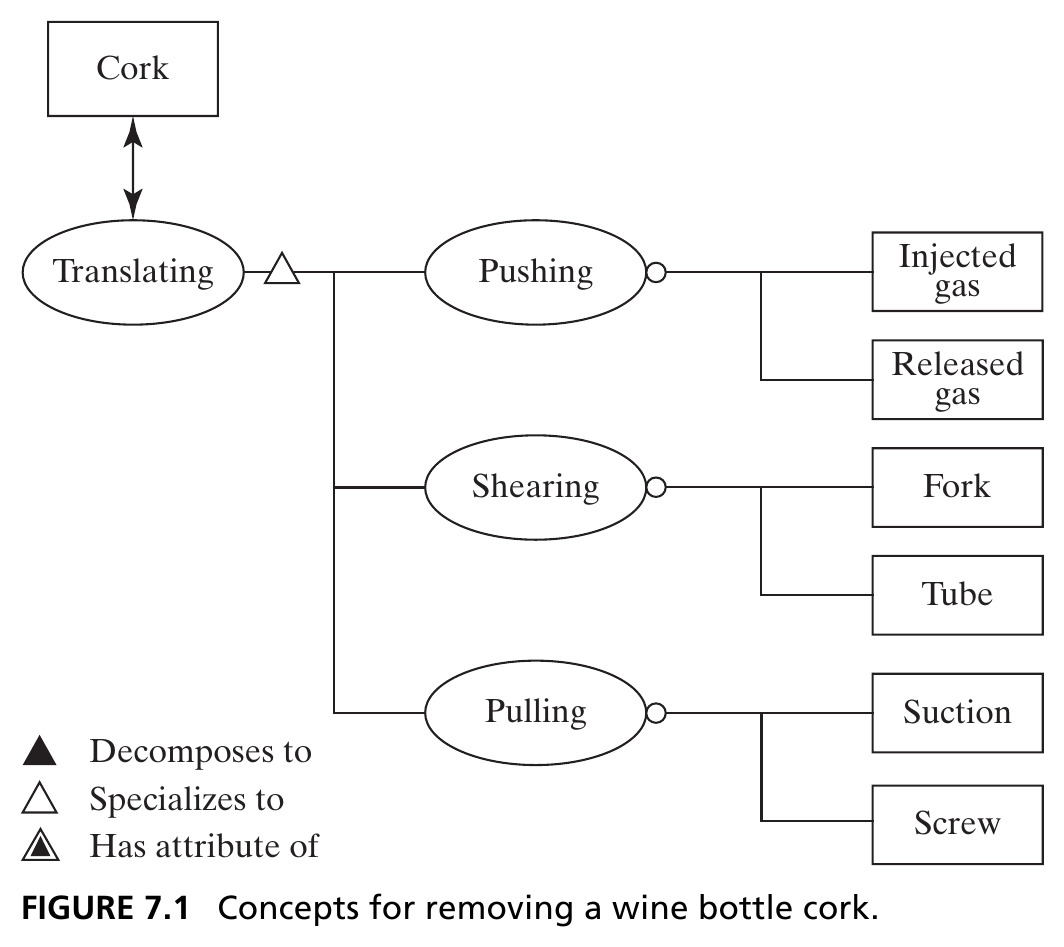
Source: Crawley, Cameron & Selva (2016), Fig. 7.1.
Tip
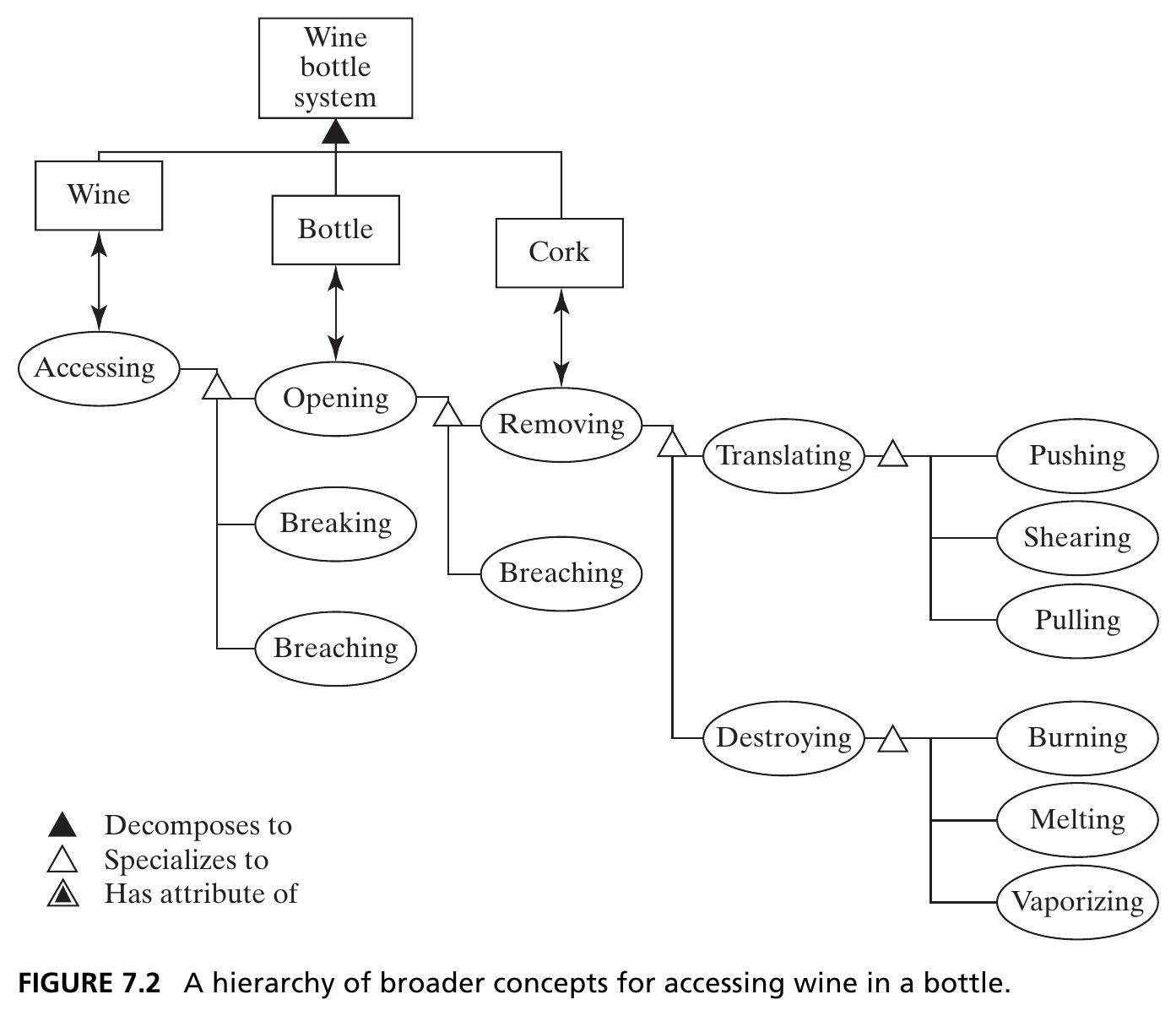
The breadth of concepts we generate depends heavily on the functional intent we pose — the more solution-neutral the expression, the broader the set of concepts.

Where to stop is a matter of practicality — with a wine bottle already on the table, concepts above “wine accessing” make no sense. Source: Crawley, Cameron & Selva (2016), Fig. 7.2.
| Question | Produces |
|---|---|
| 7a. Who are the beneficiaries? What is the solution-neutral operand and its value-related attribute/process? | A solution-neutral framing of the desired function |
| 5a. What is the value-related operand-process-form? What is the concept? What other concepts satisfy the same function? | The operand-process-form construct defining the system |
| 5b. What are the internal functions? What are the concept fragments and integrated concept? | The internal processes/operands, first- and second-level |
The procedure (Question 7a):
Tip
Two new examples: an air transportation service (beneficiary: the traveler) and a home data network (beneficiary: the surfer).
| Question | Transportation Service | Home Network |
|---|---|---|
| Beneficiary? | Traveler | Surfer |
| Need? | “Visit a client in another city” | “Buy a cool book” |
| Solution-neutral operand? | Traveler | Book |
| Benefit-related attribute? | Location | Ownership |
| Other operand attributes? | Alone with light luggage | Consistent with tastes |
| Solution-neutral process? | Changing (transporting) | Buying |
| Attributes of process? | Safely and on demand | Online |
When a system operates, the intent vanishes. Watching a room full of servers, or a plane in flight, it’s hard to tell why — the architect must record intent, because once built, the system rarely says it back.
In summary: the functional intent for a system should be stated as a solution-neutral function — an operand and a process (with their attributes) linked to value, containing no reference to solution.
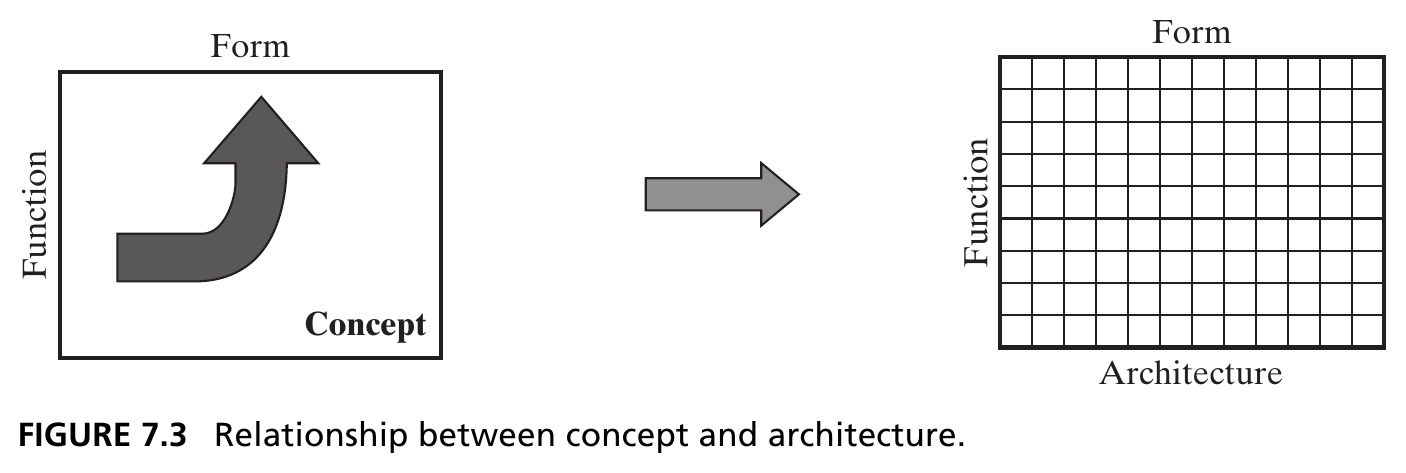
Concept is a product or system vision, idea, notion, or mental image that maps function to form. It embodies a sense of how the system will function and an abstraction of the system form — a simplification of the architecture that allows for high-level reasoning.
Concept is not a system attribute, but a notional mapping between two attributes: form and function.

Concept and architecture both map function to form — concept does it in a general way, architecture in elaborate detail. If you have a concept, it guides the architecture; if you have an architecture, concept rationalizes it. Source: Crawley, Cameron & Selva (2016), Fig. 7.3.
Tip
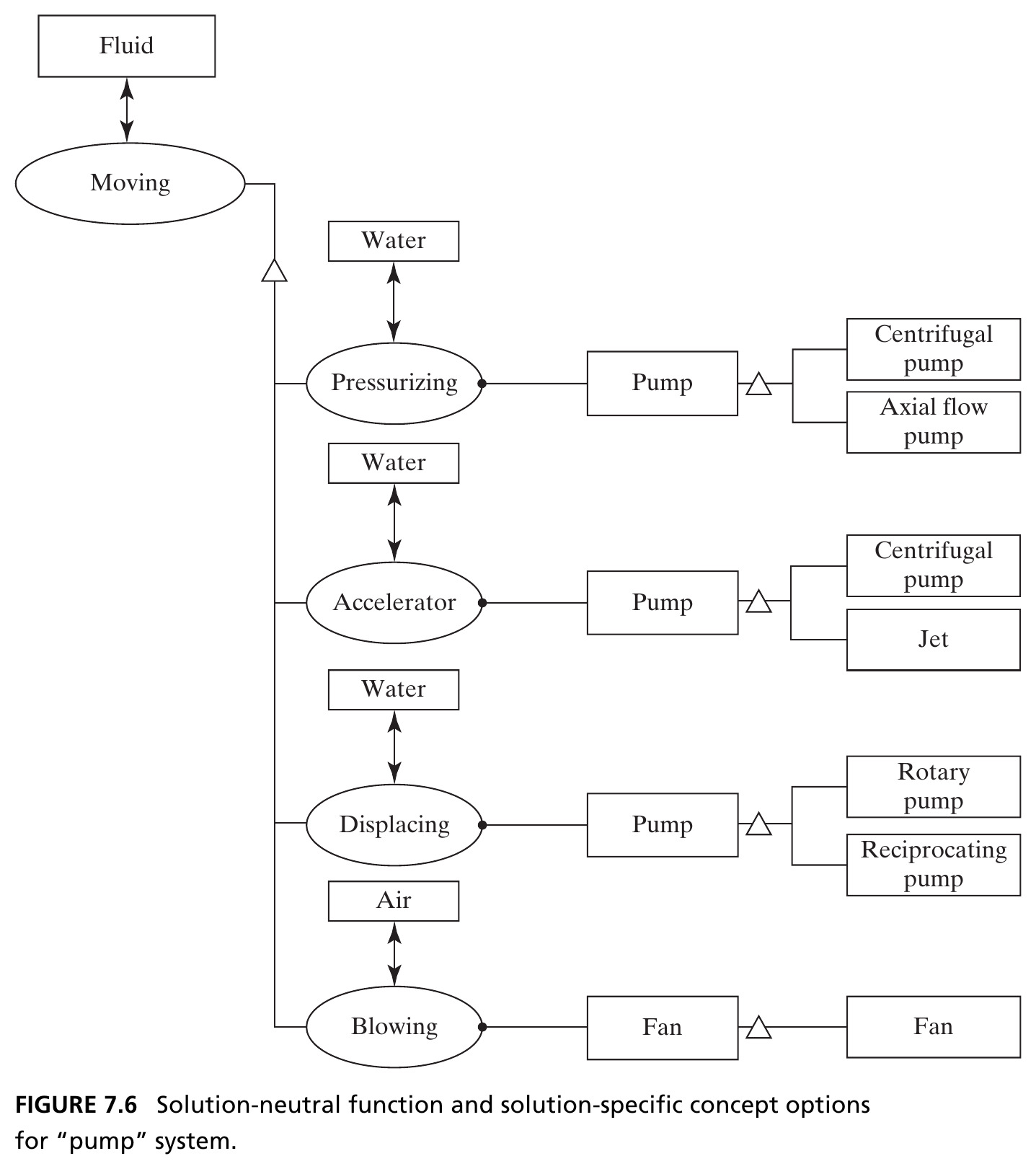
Pump: solution-neutral function is “moving fluid.” The concept is water (specific operand), pressurizing (specific process), using a centrifugal pump (specific instrument of form).
Tip
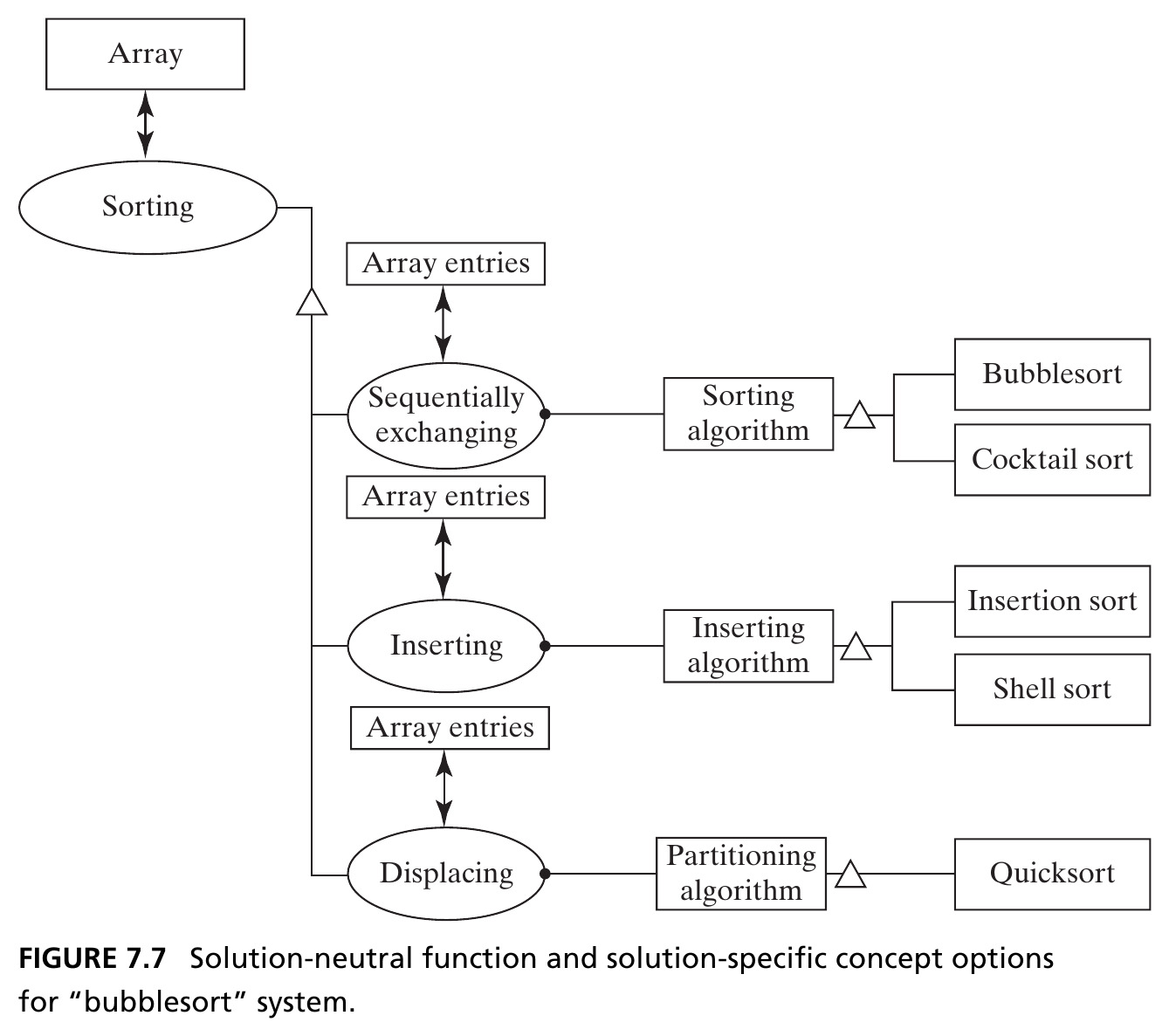
Bubblesort is literally the name of a concept: array (specific operand: entries), sequentially exchanging (specific process), using bubblesort (specific instrument).

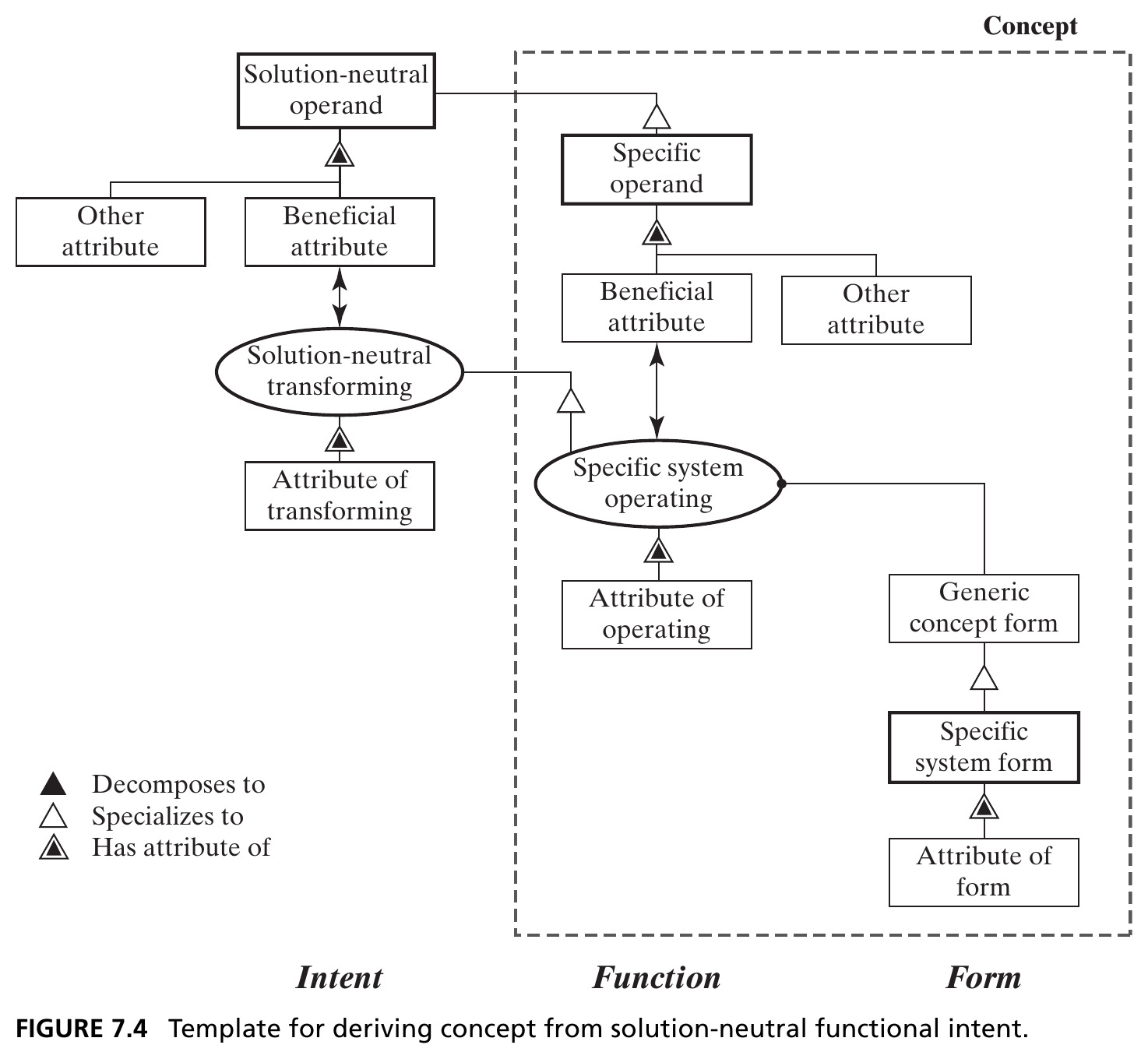
Five key ideas (thick borders): solution-neutral operand, specific operand, specific system operating, generic concept form, specific system form. Intent → Function → Form. Source: Crawley, Cameron & Selva (2016), Fig. 7.4.
| Solution-Neutral Operand | Solution-Neutral Process | Specific Operand | Specific Process | Specific Instrument |
|---|---|---|---|---|
| Fluid | Moving | Water | Pressurizing | Centrifugal pump |
| Array | Sorting | Array entries | Sequentially exchanging | Bubblesort |
| Cork | Translating | Cork | Pulling | Screw |
| Traveler | Transporting | Traveler | Flying | Airplane |
| Book | Buying | Internet | Accessing | Home DSL connection |
There is no single relationship between solution-neutral and specific operand/process — specializing to concept requires creativity, not automation.
A few of the patterns the specific operand can take, relative to the solution-neutral operand:
Tip
Similar patterns apply to specializing the process — e.g., transporting a traveler by flying a traveler.
| Question | Transportation Service | Home Network |
|---|---|---|
| Specific operand? | Traveler | Internet |
| Benefit-related attribute? | Location | Access |
| Other operand attributes? | Alone with light luggage | High-speed connection |
| Specific process? | Flying | Gaining (accessing) |
| Attributes of process? | In less than 2 hours | Reliably |
| Generic concept form? | “Flyer” | “Accesser” |
| Specific form? | Airplane | Home DSL connection |
| Attributes of form? | Commercial | Inexpensive |
Tip
Developing concepts is an open-ended creative process — the architect should build a rich set of alternatives before sorting and down-selecting (Ch. 11).

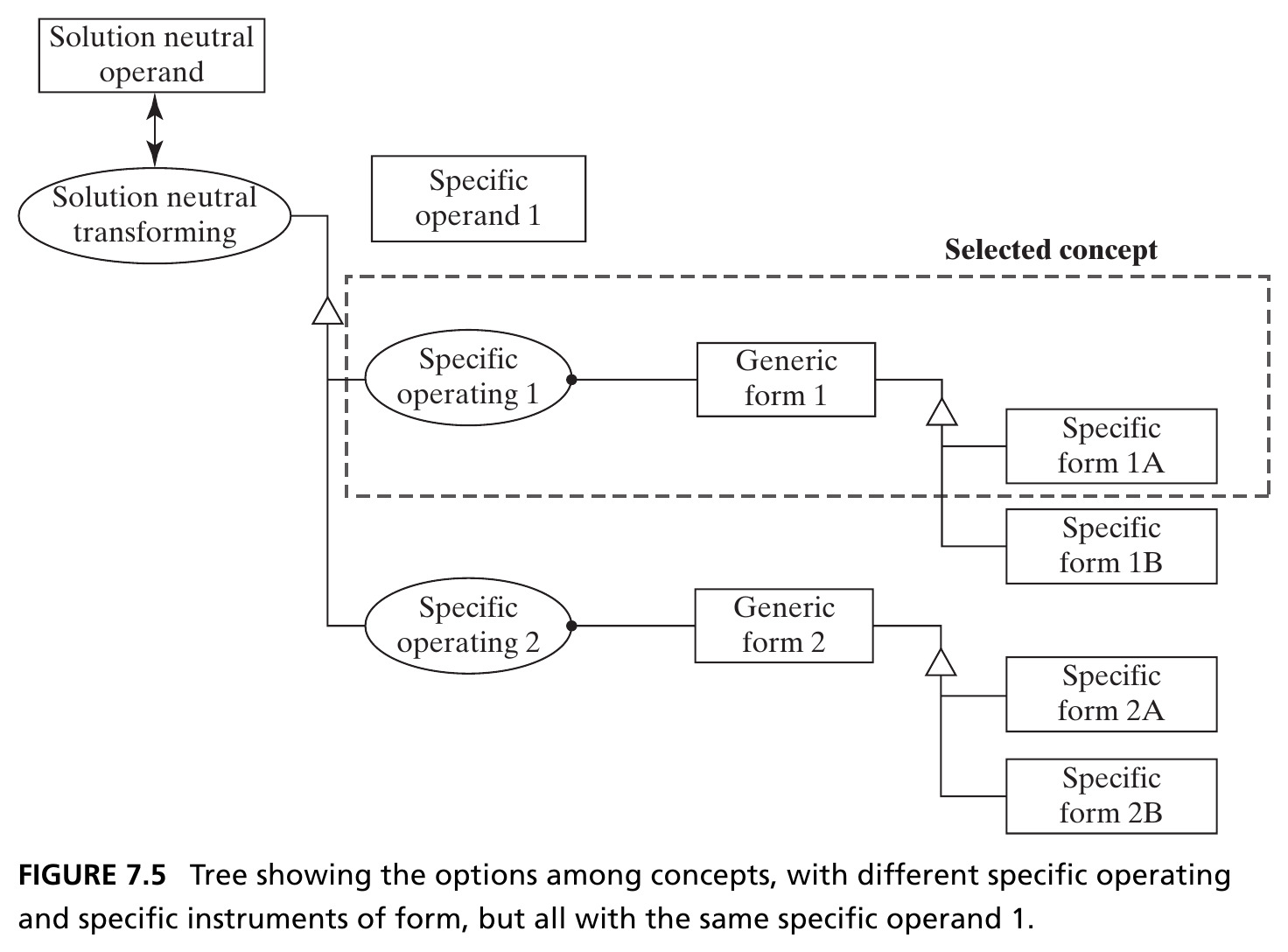
An operand layer, a process layer, and an instrumental form layer. Fewer operand options than process options, and fewer process options than form options — a decision tree. Source: Crawley, Cameron & Selva (2016), Fig. 7.5.

Seven non-exhaustive concept options for moving fluid — from pressurizing with a centrifugal pump, to blowing air with a fan. Source: Crawley, Cameron & Selva (2016), Fig. 7.6.

Three principles of operation for sorting an array — sequentially exchanging, inserting, displacing — each with specific algorithms. Source: Crawley, Cameron & Selva (2016), Fig. 7.7.

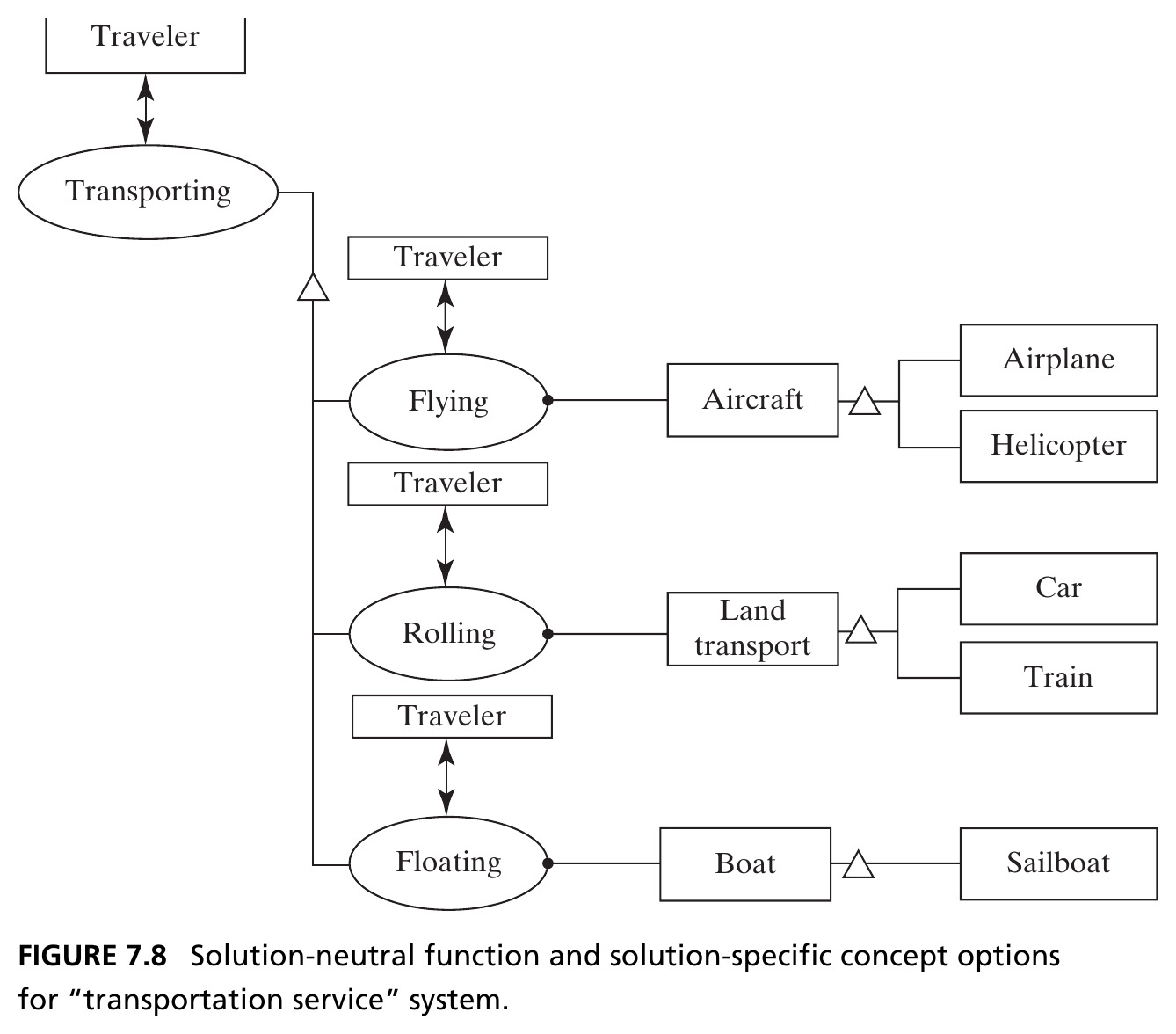
Flying, rolling, and floating — each linked to common instruments. Traveler is the only likely operand; transporting is a long-standing human endeavor. Source: Crawley, Cameron & Selva (2016), Fig. 7.8.

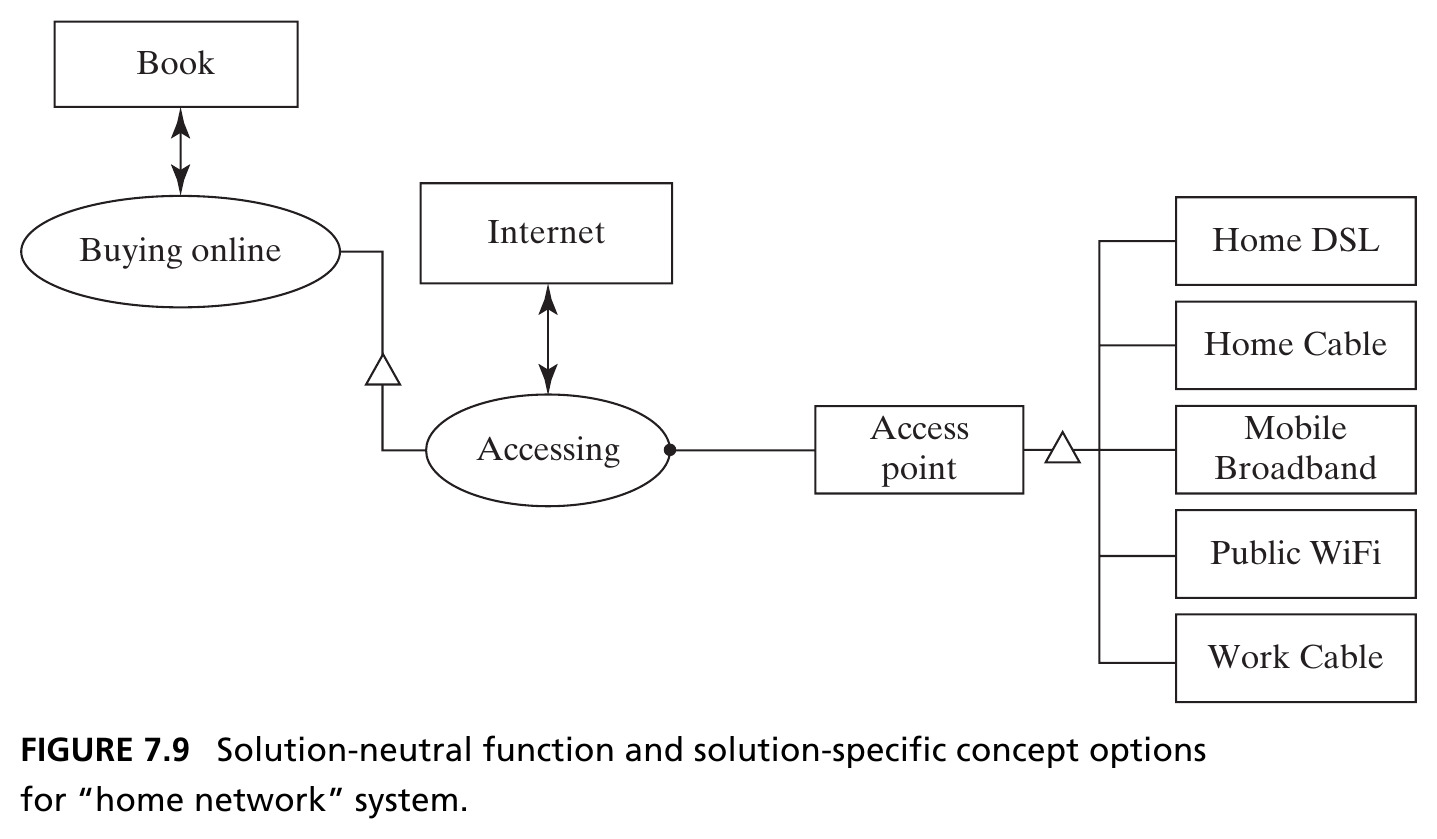
A far more limited option space — buying a book online basically requires accessing the Internet, so the only real options are how you access it. Source: Crawley, Cameron & Selva (2016), Fig. 7.9.
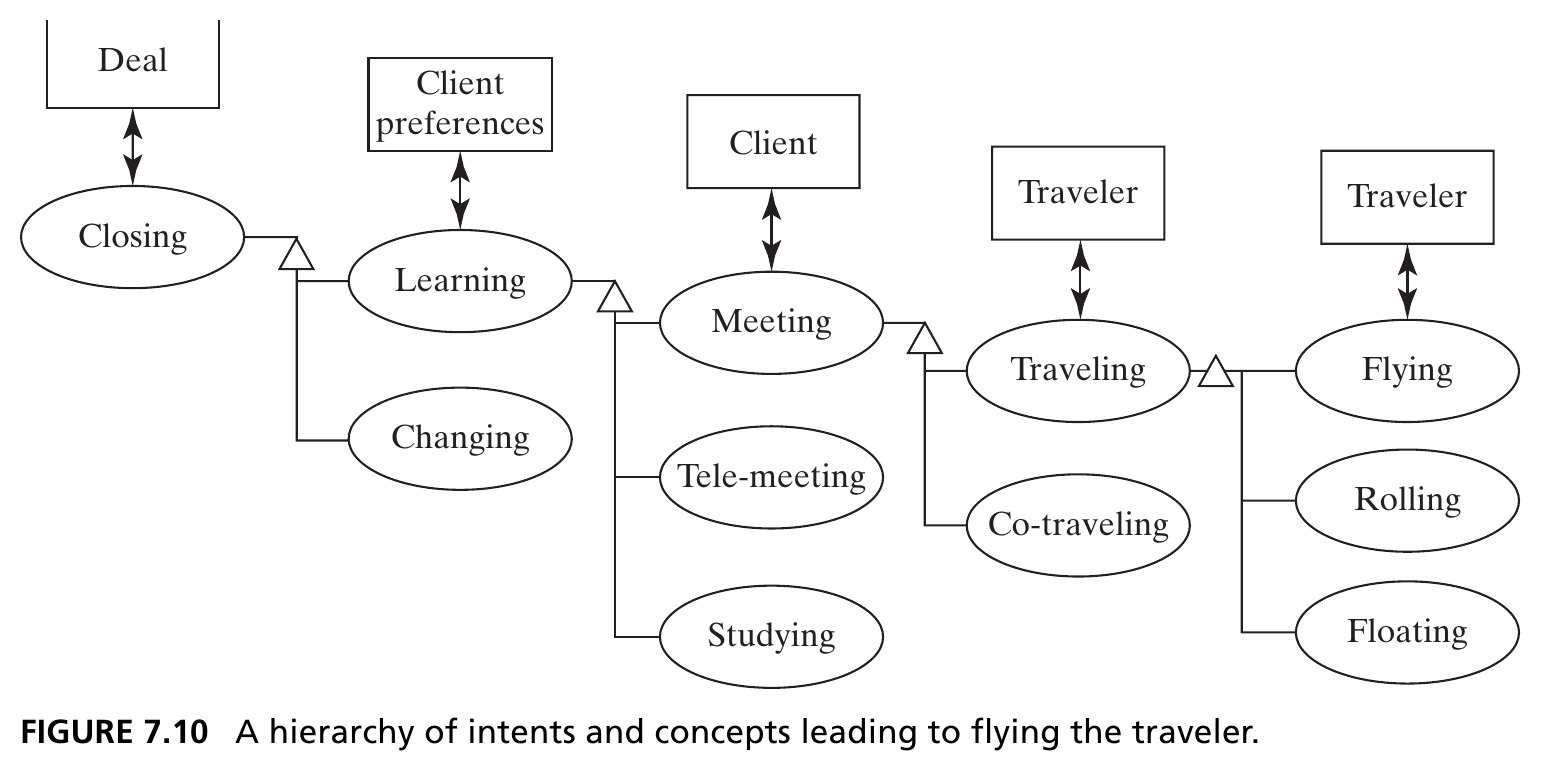
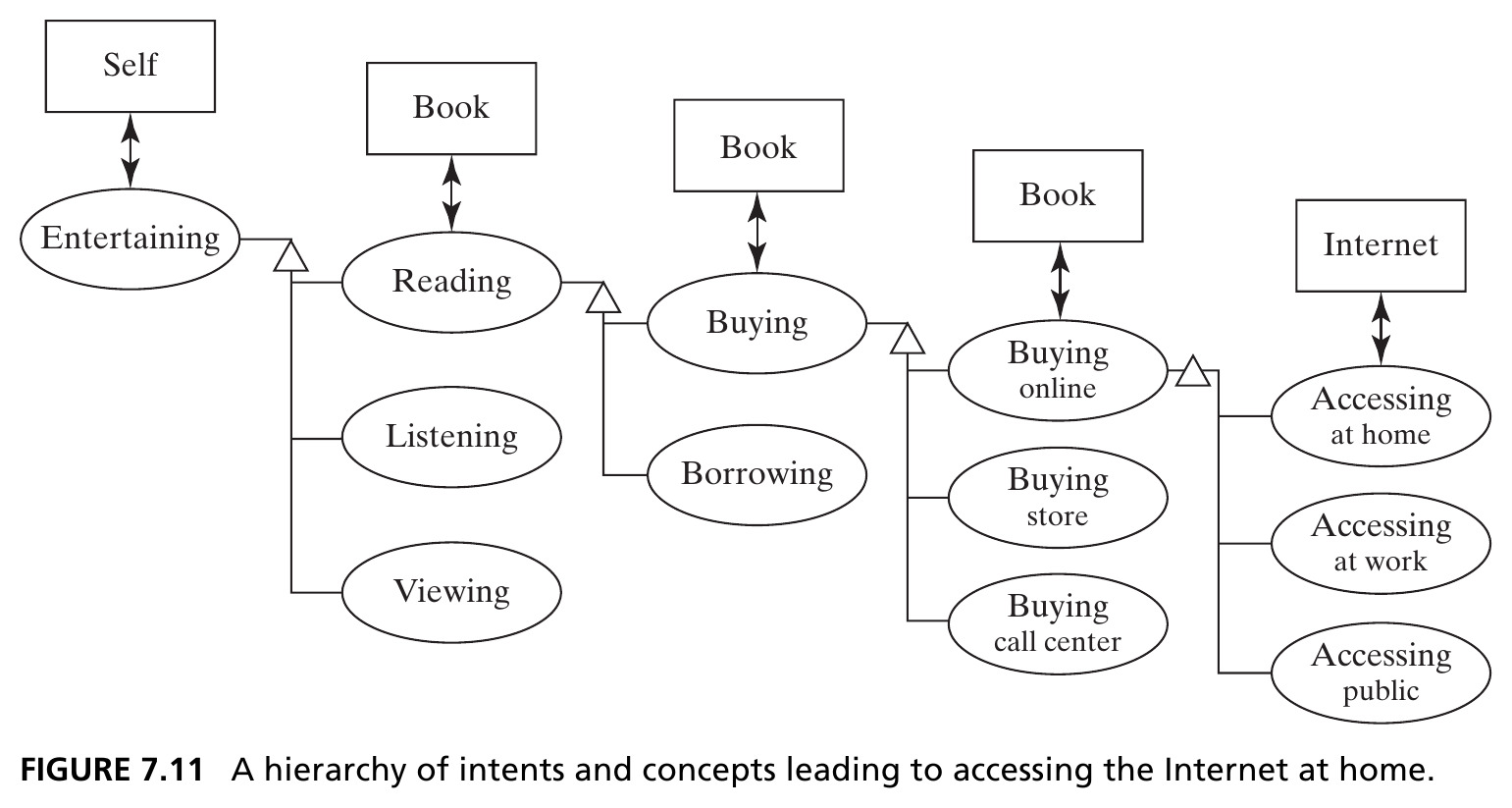
The specific function at one level becomes the solution-neutral functional intent at the next level down.
Closing a deal, by learning client preferences, by meeting the client, by traveling, by flying. At every level there are alternatives — a teleconference instead of a visit, a train instead of a flight. Source: Crawley, Cameron & Selva (2016), Fig. 7.10.
Entertainment → reading books → buying books → buying online → accessing the network. Understanding this hierarchy might surface new options, like selling electronic books. Source: Crawley, Cameron & Selva (2016), Fig. 7.11.
Tip
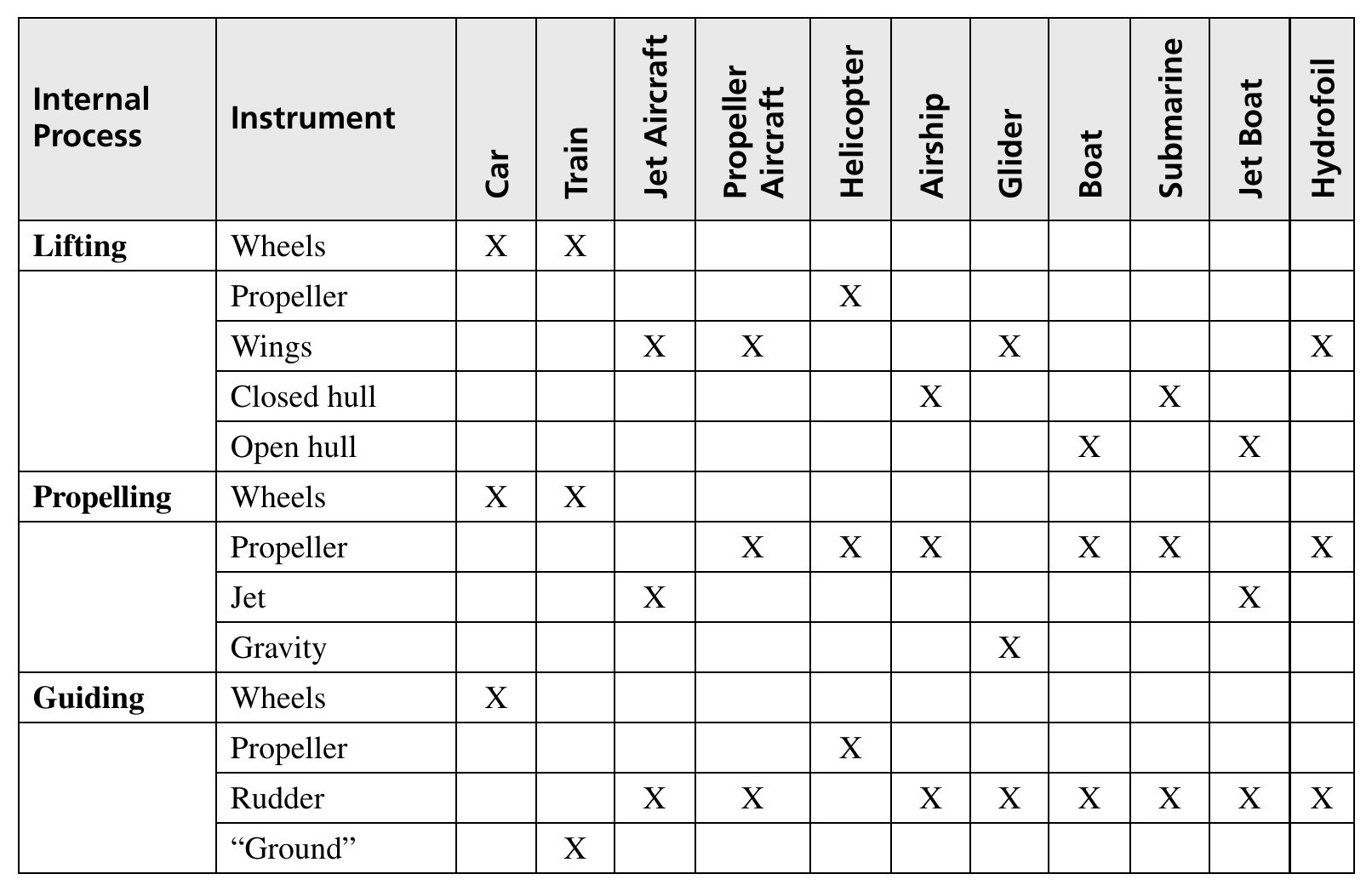
Transporting has at least three important internal processes: lifting (overcoming gravity), propelling (overcoming drag), and guiding. Without all three, transporting doesn’t work.

Each column is an integrated concept. Aircraft and gliders differ only in propulsion; airships and submarines are conceptually identical, differing only in operating medium. Source: Crawley, Cameron & Selva (2016), Table 7.6.

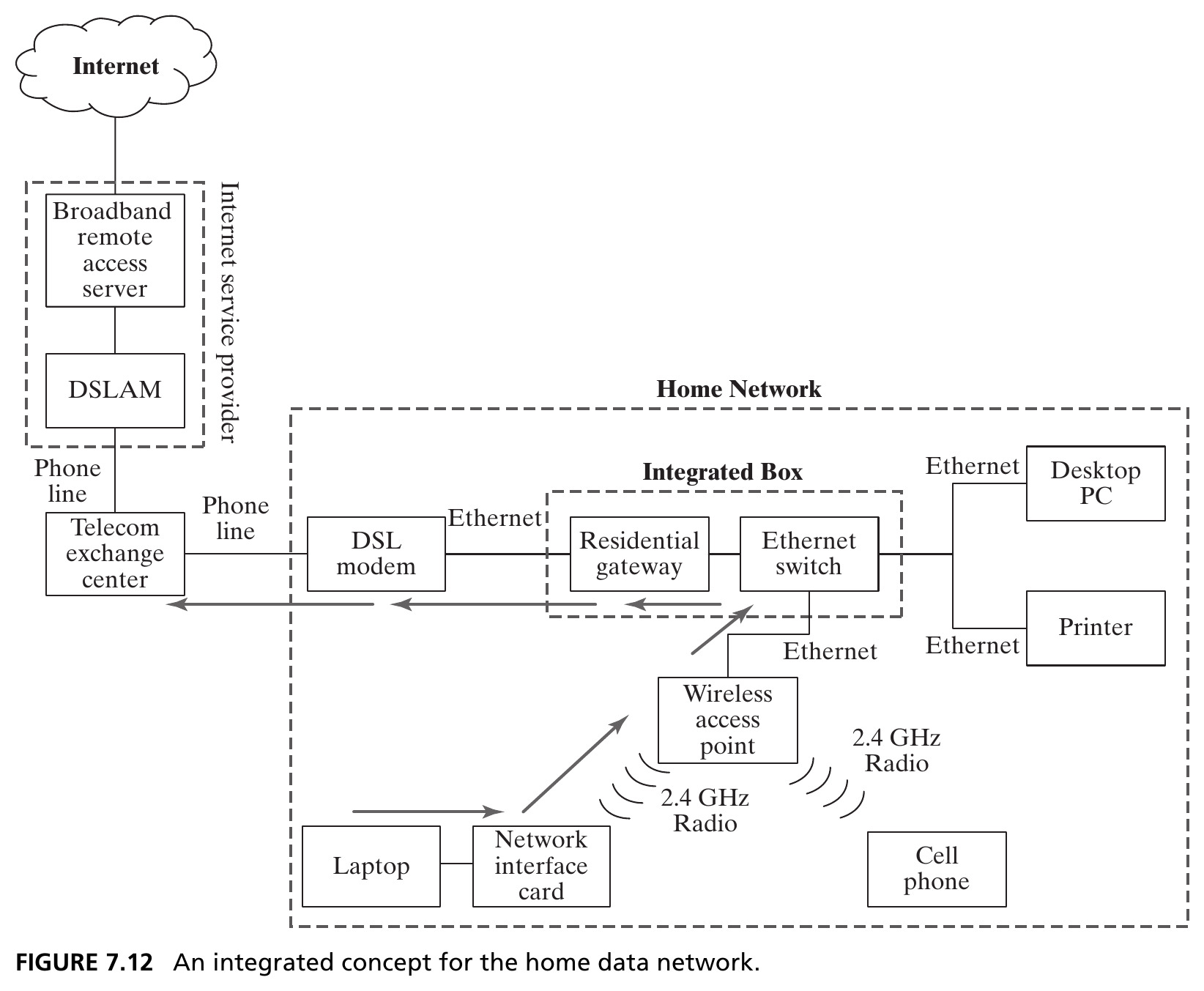
A DSL modem plus a box combining a residential gateway and Ethernet switch, with both WiFi and Ethernet connections to user devices. Source: Crawley, Cameron & Selva (2016), Fig. 7.12.
| Function | Concept 1 | Concept 2 | Concept 3 |
|---|---|---|---|
| Local network ↔︎ ISP | DSL | Coaxial cable | Mobile broadband |
| Modulating carrier | Dedicated DSL modem | Cable modem, integrated | Embedded broadband modem |
| Managing local data | Gateway + switch + WAP | Integrated modem/gateway/switch | Modem + phone tether |
| Connecting devices | WiFi + Ethernet | Cable + Ethernet | WiFi |
| Interacting with user | Laptop, phone, desktop, printer | VOIP, TV, desktop, printer | Laptop |
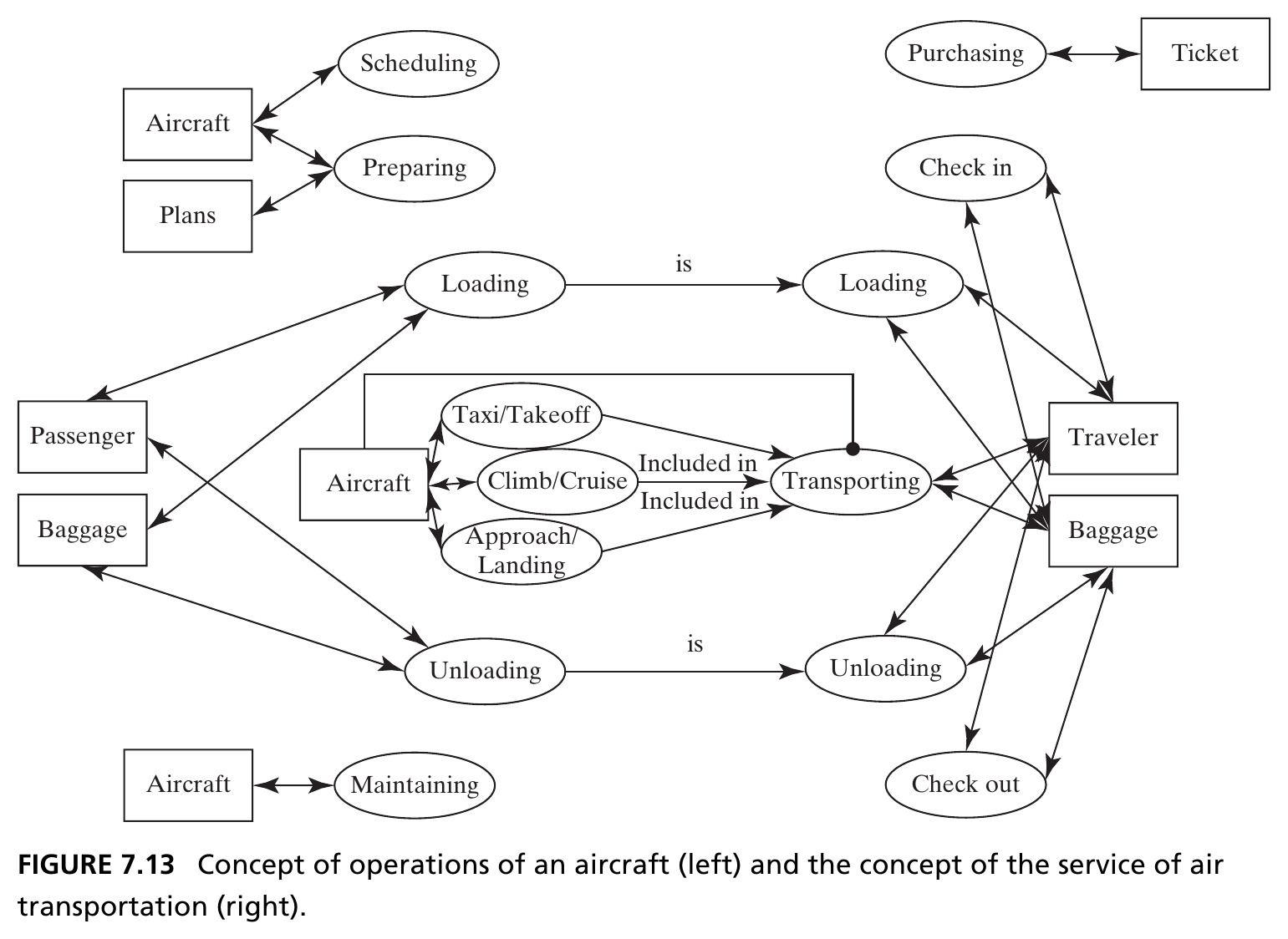
If the enterprise transfers the instrument, it is a good (an aircraft manufacturer sells airplanes). If it transfers the function, it is a service (an airline sells transportation).
From the aircraft’s own conops, the aircraft is the operand — it’s loaded, flown, maintained. From the perspective of the service, the aircraft is the instrument — it transports the traveler.

Left: the concept of operations of the aircraft itself (scheduling, loading, taxi/takeoff, climb/cruise, approach/landing, unloading, maintaining). Right: the concept of the service of air transportation, seen from the traveler’s side (purchasing, check-in, loading, transporting, unloading, check-out). Source: Crawley, Cameron & Selva (2016), Fig. 7.13.

Tip
Details of taxi, takeoff, and the like are relatively unimportant to the traveler — but very important to the aircraft’s own concept of operations. Same system, different conops, depending on perspective.
Tip
Reference: Crawley, E., Cameron, B., & Selva, D. (2016). System Architecture: Strategy and Product Development for Complex Systems. Pearson. Chapter 7.
Chapter 8 builds on the selected concept and concept of operations to develop the full architecture of the system — completing the move from analysis to synthesis.

← Course Home · Systems Architecture · Chapter 7